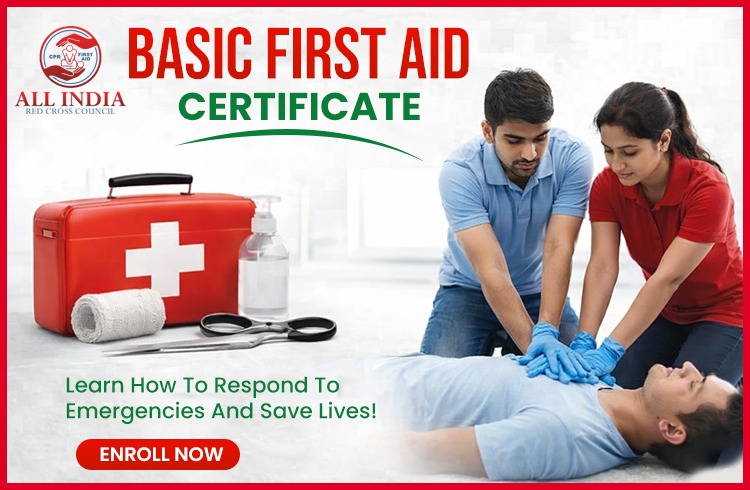
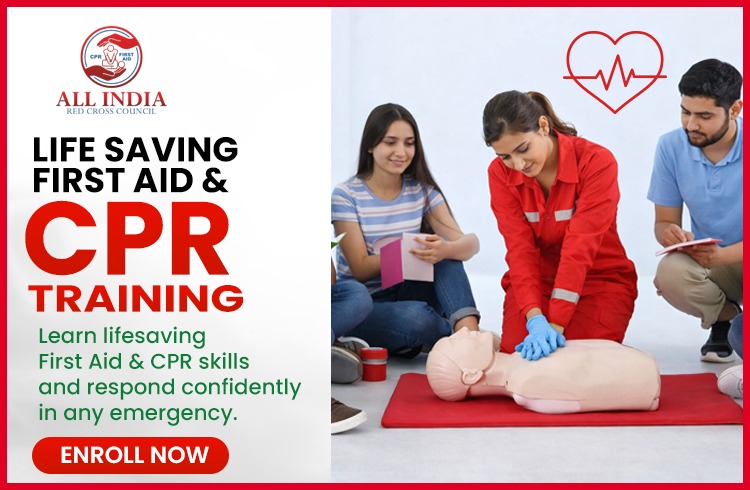
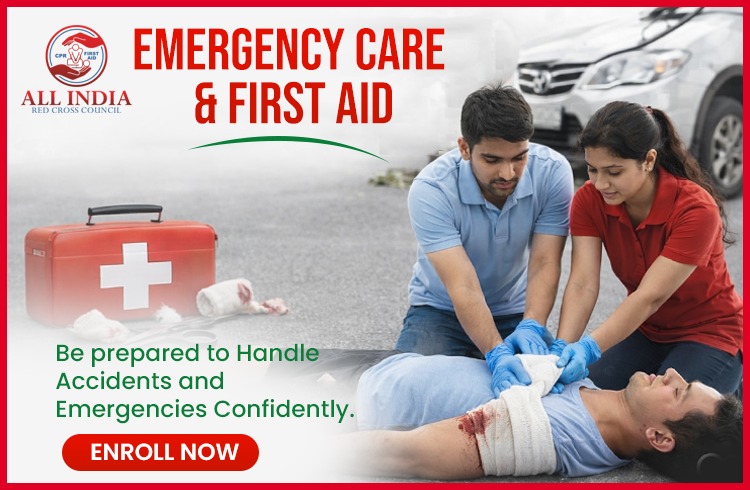
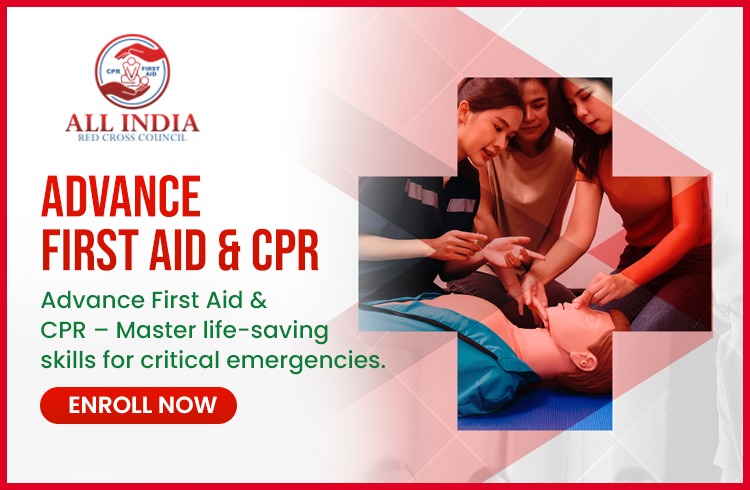
BASIC FIRST AID & CPR TRAINING
Organized by: AIRC COUNCIL – All India Red Cross Council
Course Duration: 2 Days
Training Type: Theory + Practical + Hands-on Training
About the Course
The Basic First Aid & CPR Training Course is designed to provide participants with essential knowledge and practical skills to respond effectively during common emergencies before professional medical assistance arrives.
Participants learn basic First Aid, CPR, AED awareness, choking management and emergency response techniques through classroom instruction and practical demonstrations.
Course Objectives
After completing this training, participants should be able to:
- Understand the basic principles of First Aid.
- Assess an emergency situation safely.
- Perform basic Adult CPR.
- Understand the use and purpose of an AED.
- Respond to choking emergencies.
- Control basic bleeding and manage common injuries.
- Provide appropriate First Aid for burns, fractures, fainting and shock.
- Place an unconscious but breathing person in the recovery position.
- Recognize situations requiring immediate medical assistance.
Course Content
Day 1 – BASIC FIRST AID
- Introduction to First Aid
- Emergency Response & Scene Safety
- Primary Assessment
- Bleeding & Wound Management
- Burns & Scalds
- Fractures, Sprains & Soft-Tissue Injuries
- Head & Spinal Injury – Basic Response
- Shock & Fainting
- Seizure / Fits – Basic First Aid
- Choking / Airway Obstruction
- First Aid Kit & Emergency Preparedness
- Practical First Aid Demonstration
Day 2 – CPR & LIFE-SAVING SKILLS
- Introduction to CPR
- Adult CPR
- CPR Practical / Hands-on Training
- AED Awareness
- Recovery Position
- Choking Management Practical
- Emergency Response Procedures
- CPR & First Aid Scenario Practice
- Practical Assessment
- Final Evaluation
Training Method
Theory + Demonstration + Practical + Hands-on Training + Assessment
Eligibility
Open to students, teachers, employees, security personnel, industrial workers, drivers, volunteers and members of the general public who want to learn basic emergency response skills.
Assessment
Participants may be assessed through:
- Theory / Knowledge Assessment
- Practical Demonstration
- CPR Practical Assessment
Certificate
Participants who successfully complete the prescribed training and assessment may be awarded an:
“AIRC COUNCIL – BASIC FIRST AID & CPR TRAINING CERTIFICATE”
Certificate issuance will be subject to the applicable AIRC COUNCIL training, attendance and assessment requirements.
Key Skills Covered
First Aid | CPR | AED Awareness | Choking | Bleeding Control | Burns | Fractures | Recovery Position | Emergency Response
Course Duration
2 Days
Training Mode
Classroom + Practical Training + online